Accessible to all, but still rare

James Gleick, author of The Information: A History, A Theory, A Flood, puts it rather elegantly:

We’re in the habit of associating value with scarcity, but the digital world unlinks them. You can be the sole owner of a Jackson Pollock or a Blue Mauritius but not of a piece of information — not for long, anyway. Nor is obscurity a virtue. A hidden parchment page enters the light when it molts into a digital simulacrum. It was never the parchment that mattered.

Historically, the two main types of obstacles to information discovery have been barriers of awareness, which encompass all the information we can’t access because we simply don’t know about its existence in the first place, and barriers of accessibility, which refer to the information we do know is out there but remains outside of our practical, infrastructural or legal reach. What the digital convergence has done is solve the latter, by bringing much previously inaccessible information into the public domain, made the former worse in the process, by increasing the net amount of information available to us and thus creating a wealth of information we can’t humanly be aware of due to our cognitive and temporal limitations, and added a third barrier — a barrier of motivation.

(via Accessibility vs. access: How the rhetoric of “rare” is changing in the age of information abundance – niemanlab.org)

Fascinating article.

I do a lot of curation, here and on other blogs, but I’d like to start doing it in a more structured manner – adding more context, building a bigger picture, etc.

An algorithm that spots fake reviews

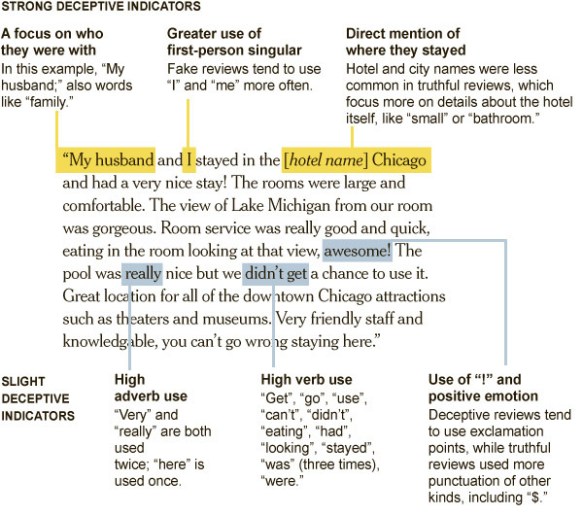
Determining the number of fake reviews on the Web is difficult. But it is enough of a problem to attract a team of Cornell researchers, who recently published a paper about creating a computer algorithm for detecting fake reviewers. They were instantly approached by a dozen companies, including Amazon, Hilton, TripAdvisor and several specialist travel sites, all of which have a strong interest in limiting the spread of bogus reviews.

(via Ferreting Out Fake Reviews Online – nytimes.com)

Ironically, it seems that machines may be better at detecting fake reviews than people.

Posted in Web

The correct use of ‘blog’ and ‘blog post’

I’m sure for some this is a point of pure pedantry, but it bugs me nonetheless. Let me clarify:

  • A blog is a particular type of website that contains many blog posts.
  • The verb use ‘I am up updating my blog’ is appropriate, but not ‘I am writing a blog’. (Technically, I appreciate you are writing a blog, but it is more likely you mean to say ‘I am writing a blog post’ or ‘I am blogging’.)
  • A single entry on a blog, like this one, is a blog post (or simply a post, if you prefer).

You are very welcome.

Is human communication to blame for the London riots?

Quote

In its coverage, the Daily Mail quoted one tweeter, AshleysAR as follows: “Ashley AR’ tweeted: ‘I hear Tottenham’s going coco-bananas right now. Watch me roll.”

However, AshleysAR’s full, unedited quote on Twitter reads: “I hear Tottenham’s going coco-bananas right now. Watch me roll up with a spud gun :|”.

Suddenly the tone of the message becomes markedly less sinister. Ashley later threatens to join in with a water pistol.

Despite the claim of Tottenham MP David Lammy that the riots were “organised on Twitter”, there is little evidence of their orchestration on the site’s public feeds.

Looking back through Saturday night’s postings, DanielNothing’s stream offers some promise of substantiating the theory with his comment: “Heading to Tottenham to join the riot! who’s with me? #ANARCHY”.

But it is followed soon after by: “Hang on, that last tweet should’ve read ‘Curling up on the sofa with an Avengers DVD and my missus, who’s with me?’ What a klutz I am!”

(via Is technology to blame for the London riots? – bbc.co.uk)

How long before we have another Twitter joke trial farce?

Internet access CAPTCHAs

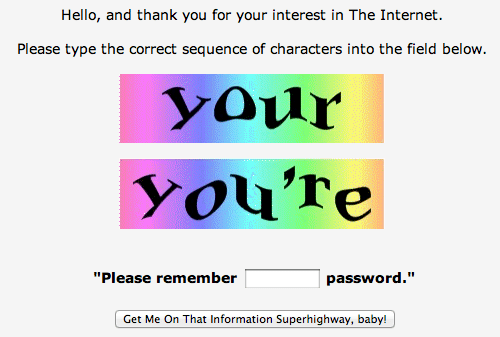
Site administrators use CAPTCHAs to prevent automated scripts from performing certain functions, such as creating an account, sending email to a distribution list, or participating in a discussion thread.

That’s fine, as far as it goes. But, frankly, I’d also like to see certain people on the Internet prevented from doing certain things. You know, like: logging onto the Internet.

And so, a modest proposal: Internet Access Captchas, built right into browsers, designed to greatly reduce the overabundance of youtube commenters, MySpacers, and bloggers.

via Internet Access CAPTCHAs – defectiveyeti.com

Yes please!

Continue reading

Feeding the trolls

James Delingtroll

In the early days, I admit, I used to get quite upset by the horrid things trolls said about me. I mean, I’m just a blogger making a case. It’s not like I’m misusing public money in the manner of, say, a UEA “climate scientist”; it’s not like I’m a politician making bad laws or some rent-seeking landowner blighting my neighbours’ views with wind farms. But it’s OK, I’m over it now. What I’ve since learned to appreciate is that the problem with trolls is not my problem: it’s theirs. These are psychologically damaged creatures, eaten up with an awful lot of rage and sense of their own inadequacies.

via Seven types of troll: a spotter’s guide – blogs.telegraph.co.uk

This Telegraph blog post is a marvellous example of a writer complaining about internet trolls, while at the same time baiting them so hard he surely must be doing it on purpose. Even his bio (which appears right at the top of the page, before the post) is a masterwork in baiting.

James Delingpole is a writer, journalist and broadcaster who is right about everything. He is the author of numerous fantastically entertaining books including 365 Ways to Drive a Liberal Crazy, Welcome To Obamaland: I’ve Seen Your Future And It Doesn’t Work, How To Be Right, and the Coward series of WWII adventure novels. His website is www.jamesdelingpole.com.

Continue reading

Personal names around the world

How do people’s names differ around the world, and what are the implications of those differences on the design of forms, ontologies, etc. for the Web?

Background

People who create web forms, databases, or ontologies are often unaware how different people’s names can be in other countries. They build their forms or databases in a way that assumes too much on the part of foreign users. This article will first introduce you to some of the different styles used for personal names, and then some of the possible implications for handling those on the Web.

This article doesn’t provide all the answers – indeed in some cases it may not be clear what the best answer is. It attempts to mostly sensitize you to some of the key issues by way of an introduction.

(via Personal names around the world – w3.org)

Worth reading for the examples they use alone.

Continue reading

Redesigning news

There has been plenty of interesting discussion about the Andy Rutledge NYT/News redux mockup I linked to a few days ago:

Beautiful by itself isn’t that hard — there are lots of beautiful sites on the web, and lots of talented designers. When it comes to effective story discovery, the innovation has all been in the direction of algorithms and raw feeds. An algorithm is how Facebook surfaces items in your News Feed; a raw feed is how Twitter organizes tweets from the people you follow, in straight reverse chronological order. But neither of those is perfect for human editorial control, which is something news organizations rightly value; there are tons of visual and contextual cues on those complicated nytimes.com pages that tell me what Times editors think is more or less important for me to see.

(via Designing a big news site is about more than beauty – niemanlab.org)

While Nieman Journalism Lab approached from a journalist’s perspective, Paul Scrivens on Drawar takes a designers view: 

Why can’t news agencies get on the ball and realize they are missing a great opportunity to leap ahead of their competition? Whenever you read about the newspaper industry all you hear about is the decline of revenue and how all papers will soon disappear. Everyone is fighting for eyeballs and the way they do it is by looking exactly like their competition?

Now I know it doesn’t have as much content as the NYT, but don’t you wish that more news sites looked like Gapers Block? Would you ever have a problem going to a beautiful site like that to catch up on what is happening today? Hell, wouldn’t you go back to check even more just because of the pleasant design? We are forced to go somewhere if we want our news and that is what is keeping these horrible news sites alive.

Is it wrong to like the Rutledge redesign? Of course not. It is a beautifully laid out page and the aesthetics are spot on, but I just think news sites need a bit more treatment than what we can get from a blog format. This may requires a whole new line of thinking that we haven’t seen before and I do believe the NYT is on the right path with Skimmer. The site itself probably publishes hundreds of news items a day. The current version of their homepage is how they believe they should handle passing all of the information to their audience. It doesn’t make it right, but it helps to show their line of thinking.

(via Redesigning And Re-Thinking The News – journal.drawar.com)

My posts here tagged news are, IMO, some of the most interesting on this blog. This post is a follow-up to News redux: Fixing news presentation online, and I expect to be posting some more ideas I have on this subject soon, in the same vein as my Permanews: Old news is good news post.

See also:

Permanews: Old news is good news

Most news outlets, including TV news shows and networks, newspapers, news websites, and blogs are targeted at news junkies: they never want to miss a story, and they want to be the first to report it to you.

If you look back on these stories even one week later, the majority of them seem unimportant or redundant in retrospect. And if you stop consuming the firehose for a few days or more, you’re lost — there are very few publications that give a general overview of what has happened, especially when venturing outside of mainstream front-page news and into a subsection, such as technology news.

I want last week’s news, but only what I need to know, and only if it has proven to have relevance beyond the day it was published.

(via More ideas than time: Last week’s news – marco.org)

I had an idea in this vein a few weeks ago, but neglected to blog about it. I called my idea permanews. Instead of being delayed arbitrarily, the news would stick around until it genuinely started to become irrelevant.

On the Permanews site, every story becomes one story, wiki style. As the story develops, the article grows and changes. There are revision histories and links to related stories etc, but at any point you should be able to visit the story and get a chronological breakdown of what happened.

Critically – and this is key – stories with pending outcomes are flagged for follow-up. If some MP promises some reform by ‘this time next year’, then 356 days later the algorithm promotes the old story as fresh news so it can be checked and updated.

Stories are promoted as headlines based on importance (activity/upvotes), not because they are current or ‘breaking’. (Presumably though, you could filter the stories any number of ways).

The algorithm would be key here: ‘Importance’ would need to trump ‘popularity’ somehow (if that’s even possible).

Continue reading

The 20 most expensive keywords (and another misleading infographic)

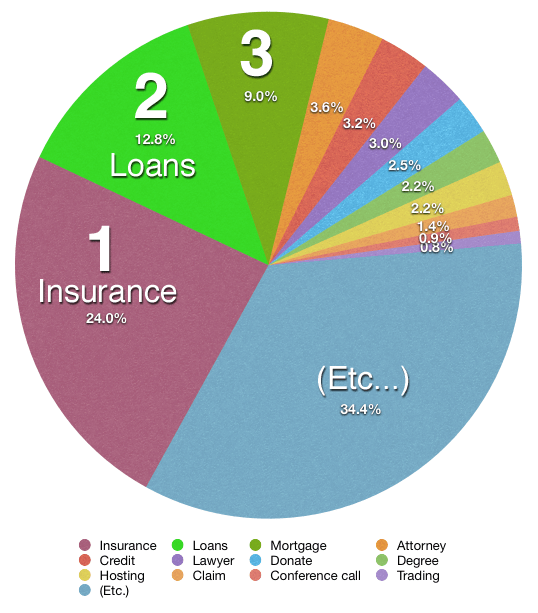
This infographic shows that just over half of the top AdWord keywords fall into insurance and loans categories … but hang on … 24% and 12.8% add up to 36.8%, not 50% or more. I’ve knocked up a quick chart in Numbers showing what I think the pie should look like in reality. Am I missing something? Why would somebody even want to misrepresent that data? So they can overcharge finance companies for SEO work?

Still, the data itself is quite interesting (if you still trust it):

The 20 keyword categories with the highest search volume and highest costs per click, thereby netting Google the most money, are:

  1. Insurance (example keywords in this category include “buy car insurance online” and “auto insurance price quotes”)
  2. Loans (example keywords include “consolidate graduate student loans” and “cheapest homeowner loans”)
  3. Mortgage (example keywords include “refinanced second mortgages” and “remortgage with bad credit”)
  4. Attorney (example keywords include “personal injury attorney” and “dui defense attorney”)
  5. Credit (example keywords include “home equity line of credit” and “bad credit home buyer”)
  6. Lawyer (“personal  injury lawyer,” “criminal defense lawyer)
  7. Donate (“car donation centers,” “donating a used car”)
  8. Degree (“criminal justice degrees online,” “psychology bachelors degree online”)
  9. Hosting (“hosting ms exchange,” “managed web hosting solution”)
  10. Claim (“personal injury claim,” “accident claims no win no fee”)
  11. Conference Call (“best conference call service,” “conference calls toll free”)
  12. Trading (“cheap online trading,” “stock trades online”)
  13. Software (“crm software programs,” “help desk software cheap”)
  14. Recovery (“raid server data recovery,” “hard drive recovery laptop”)
  15. Transfer (“zero apr balance transfer,” “credit card balance transfer zero interest”)
  16. Gas/Electricity (“business electricity price comparison,” “switch gas and electricity suppliers”)
  17. Classes (“criminal justice online classes,” “online classes business administration”)
  18. Rehab (“alcohol rehab centers,” “crack rehab centers”)
  19. Treatment (“mesothelioma treatment options,” “drug treatment centers”)
  20. Cord Blood (“cordblood bank,” “store umbilical cord blood”)

Continue reading

Fighting the Google Panda death grip

After he tightened the site’s editorial standards and made other tweaks that didn’t change its fortunes, [HubPages chief executive Paul] Edmondson made a discovery. Google’s search engine had indexed some of HubPages content as being tied to “ww.hubpages.com” rather than “hubpages.com,” and the incorrectly indexed sites were ranking higher for certain search queries.

In May, Edmondson wrote an email to Google engineers about the discovery and asked whether he should break up his site into “subdomains,” where each contributor of content to HubPages would essentially have a separate website. That way, perhaps Google’s algorithm could distinguish which part of HubPages had original content and which part had lower-quality articles that were just copies of other content on the Web. Publishing sites such as WordPress, Tumblr and Google’s own Blogger are structured with subdomains, whereas Google’s YouTube and others are not.

In June, a top Google search engineer, Matt Cutts, wrote to Edmondson that he might want to try subdomains, among other things.

(via Site Claims to Loosen Google “Death Grip” – blogs.wsj.com)

Surely this is really bad news? Perhaps HubPages will be honest in how it organises content, but other sites won’t. I predict that keyword heavy subdomains will be the next big ‘SEO expert’ trend.

An idea for more meaningful ‘like’ buttons

The inadequacies of the various ‘like’ buttons that appear all over the web have been noted before, but a post from Ed Walker tonight inspired me to mock up an idea I’ve had for a simple way to bring some more semantic meaning to these buttons. Ed says:

What is the recommended button there for? The equivalent of a Facebook like? A chance to show you appreciate the story, the author or the subject?

I’ve spotted a trend on WalesOnline, whenever we report the death of a young person […] we don’t get comments (very rarely) but we do get a lot of recommendations. Constantly in the most recommended lists, knocking rugby stars and political debates down a peg or two. Facebook is for posting the RIP messages and joining groups expressing your sorrow, sharing that grief with your friends, but local media sites are the way to show the wider world (outside of the Facebook login) that the death of a friend/relative is important to the community.

It seems in the case of the death of young people it’s a way of showing you care. It says to us as editors that you think this story is important, you’re showing us it should be high up the news list and it should be featured.

(via Generation grief: A modern way of letting go – edwalker.net)

Continue reading

I don’t care about SEO

A few months ago I tweeted that we no longer needed to sell User Experience and our job was now to focus on delivering good user experiences.

These days we’ve stopped selling UX and started simply doing it.

Sure, some agencies or individuals haven’t quite reached that inflexion point yet, but I can tell you that it’s on the way. Demand is far outstripping supply, so if you’re not there yet, you soon will be. User Experience is no longer a point of difference, it’s just the way all good websites are built these days.

I don’t care about User Experience – andybudd.com

Hopefully in the very near future this shift in approach will happen for SEO too. There really shouldn’t be an SEO company or a marketplace of SEO ‘experts’. The work of SEO is half website design and development (good semantic markup, sensible layouts) and half content production (incorporating keywords, writing good titles and meta descriptions etc.). These skills should be in-house and standard practice.

Search Engine Deoptimization

The blog Live at the Witch Trials proposes a method for harming the search engine rankings of any companies you feel may be deserving. To abbreviate:

  • Look through your target websites terms and conditions to find a clause that prohibits linking. Ryanair’s site has the following T&C:
    “Links to this website. You may not establish and/or operate links to this website without the prior written consent of Ryanair. Such consent may be withdrawn at any time at Ryanair’s own discretion.”
  • Search for all the websites that do link to them anyway.
  • Find contact information for those sites and send them strongly worded cease and desist notices that look official, but make no false claims.

This should have a pretty big impact on how important search engines feel your targets site is, and they’ll soon start to drop in the rankings accordingly.

Fun!

Posted in SEO

A Posterous SEO issue you should probably be aware of

Posterous places nonremovable canonical URL tags on its posts. That tells the search engine to assign all the “link juice” to the Posterous-hosted page no matter where else the content may exist.

I do not want the Posterous version of the document to be the official URL for much of my content.

(via Why I’m dropping Posterous this weekend – forums.posterous.com)

I hadn’t spotted this, but I’m glad I know now.

This could be a problem for you if you duplicate your own content on a Posterous blog, but you don’t want Posterous to be the main home for that content. It is very likely that your Posterous blog will rank higher than the other place, whether you want it to or not.

In truth, it’s probably not an issue for most users. Better to know and not care than to care and not know.

Further reading: Learn about the Canonical Link Element in 5 minutes – mattcutts.com

QRobots: A QR code alternative with personality

QR Codes are a great idea but they are big and ugly. You can customise them to a degree, but they still lack personality. For example, here are some I made to print as Moo stickers:

There is also the Microsoft tag, but that looks even worse.

I wonder if it would be possible to create another type of code that works in the same way, but instead of generating a random checkerboard pattern, it created some kind of face. I’ve quickly drawn up two examples of what these could look like (at the top), but I imagine a much more detailed/abstract look would be required to accommodate the amount of information they would need to contain.

Continue reading

Why are…

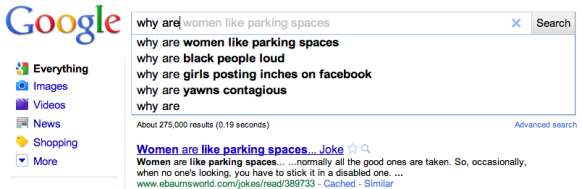
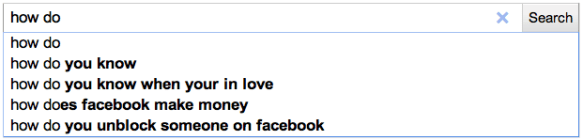
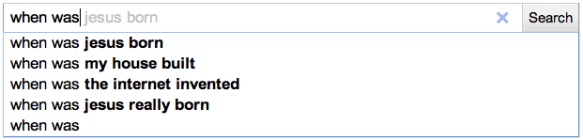
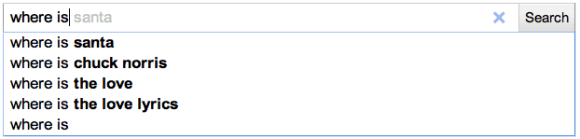
Google have become the giant they are by giving people what they want. They’re now so good at this they can actually predict what people are most likely to want. This has given them a lead in areas you wouldn’t imagine, like spelling correction or translation.

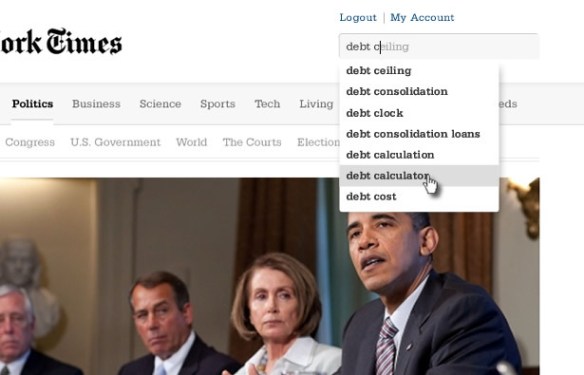
I wonder if this approach will have negative consequences down the road though. Google isn’t suggesting the best results, it’s suggesting the most popular.

I don’t think we really need this kind of help.

Continue reading