Create strong passwords

I thought this was a good method for creating strong but easy to remember passwords.

What to do Suggestion Example
Start with a sentence or two (about 10 words total). Think of something meaningful to you. Long and complex passwords are safest. I keep mine secret. (10 words)
Turn your sentences into a row of letters. Use the first letter of each word. lacpasikms (10 characters)
Add complexity. Make only the letters in the first half of the alphabet uppercase. lACpAsIKMs (10 characters)
Add length with numbers. Put two numbers that are meaningful to you between the two sentences. lACpAs56IKMs (12 characters)
Add length with punctuation. Put a punctuation mark at the beginning. ?lACpAs56IKMs (13 characters)
Add length with symbols. Put a symbol at the end. ?lACpAs56IKMs” (14 characters)

Test your password with a password checker

A password checker evaluates your password’s strength automatically. Try our secure password checker.

via Create strong passwords – microsoft.com

To add complexity with case though, I might use vowels to select uppercase letters instead. Splitting the alphabet in half seems like it would be much trickier to remember, for me at least.

Found via Tech Radar’s 25 internet security tips, which has 24 other excellent suggestions…

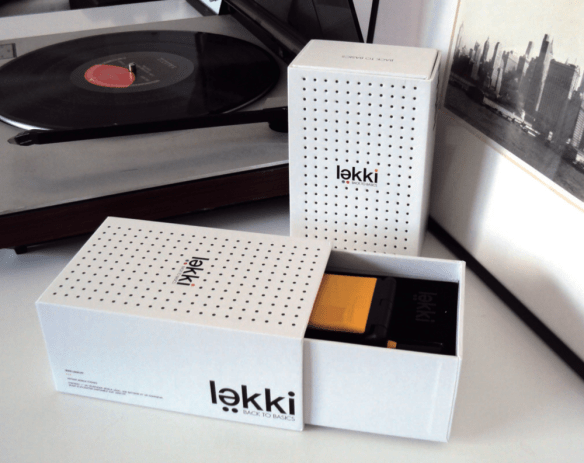
Lekki: Marketing old mobiles

Lëkki is a French company specializing in “revamped” mobile phones from the 1990s, reinvigorated with bright new paint jobs.

via Anyone Want A Retro Mobile? – retrothing.com

This is a brilliant marketing idea.

  1. Find scrapheap tech.
  2. Apply cosmetic improvements, slick packaging and lifestyle marketing.
  3. Sell to retro geeks, eco nerds, design hipsters and luddites.
  4. Profit.

Or: Reinvent refuse, recycle!

Continue reading

Welcome to the world of tomorrow…

Trying to look into the future is a grand old time, one that countless science fiction writers and visionaries have done more than a century. From Julies Verne predicting space rockets to Gene Roddenberry’s flip mobile phones to William Gibson defining cyberspace before it existed, science fiction writers have been leading the way towards technology’s future.

via Have we already caught up to science fiction? – thenextweb.com

What a dumb article. I thought The Next Web was better than this. Ignoring for a minute the two errors in that opening paragraph, what is the question exactly? Let me rephrase:

‘Are we living in the future already? Not the really distant future of course, just the near future. Because it feels like we’re really close to living in the near future if we aren’t already.’

The role of SF has never really been to predict the future anyway. It’s a genre more interested in exploring the themes of today, often by taking them to logical extremes to help us reflect. Verne didn’t predict space rockets – he imagined them. Likewise, Roddenberry didn’t invent the communicator – he devised a means of letting his characters communicate over vast distances.

I’ll leave you with Chad Catacchio’s insightful closing words:

“The future might not be now, but to me, it’s close.”

Link

Very cool! Though I’d be reluctant to use one, because who knows what nasties could be on the stick?

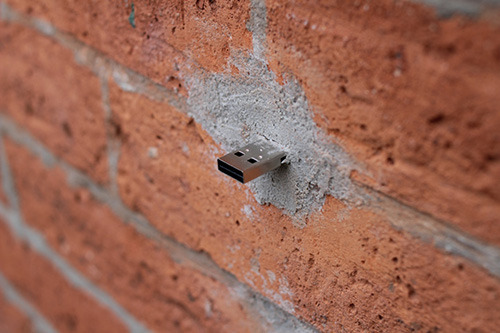
I am pleased to preview ‘Dead Drops’ a new project which I started off as part of my ongoing EYEBEAM residency in NYC the last couple weeks. ‘Dead Drops’ is an anonymous, offline, peer to peer file-sharing network in public space. I am ‘injecting’ USB flash drives into walls, buildings and curbs accessable to anybody in public space. You are invited to go to these places (so far 5 in NYC) to drop or find files on a dead drop. Plug your laptop to a wall, house or pole to share your files and date. Each dead drop contains a readme.txt file explaining the project. ‘Dead Drops’ is still in progress, to be continued here and in more cities. Full documentation, movie, map and ‘How to make your own dead drop’ manual coming soon! Stay tuned.

via “Dead Drops” preview – datenform.de

I wonder what it would take to make a wi-fi dead drop?

See also:

Dead drop (Wikipedia)

Link

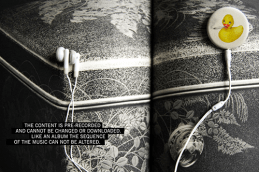
Playbutton is a wonderful idea that would make music collectable again and give artists back the ability to sell an album experience instead of just letting people cherry-pick individual tracks. Music piracy would still be pretty straightforward, but this idea taps into the desire to own and display something that represents what you love. They could be pretty cheap too and – so long as the audio quality is good – be a huge hit.

Would be nice to see a design with an iPod shuffle-like clip instead of a pin.

There, I fixed it…

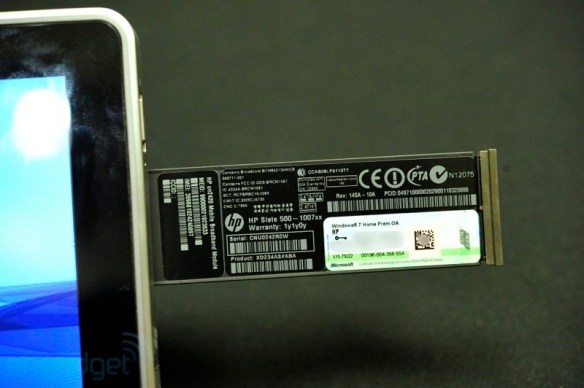
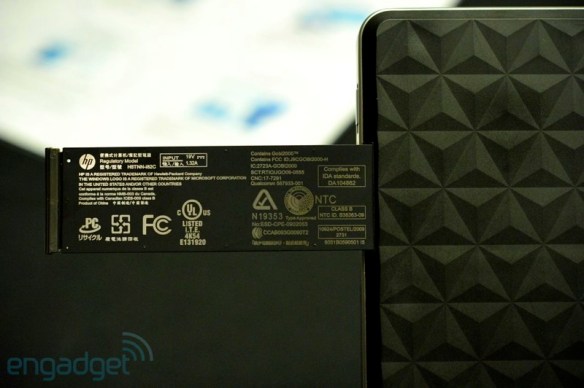
HP Slate solution to "too many stickers" syndrome

HP Slate solution to "too many stickers" syndrome

Yes, dear reader, that’s a little pull-out drawer who’s only role in life is to hold and display a dizzying array of licencing and serial number data. There’s even more of this stuff on the back too.

If an Apple designer pitched this craplution to Steve Jobs, he’d rip their still-beating heart clear out of their chest.

via HP Slate has a bad solution to “too many stickers” syndrome – tuaw.com / HP Slate hands-on – engadget.com

I don’t even know what to say about this…

Continue reading

The Cult of Mac: On being an Apple ‘fanboi’

Back in 1994, Italian novelist Umberto Eco (writer of “Foucault’s Pendulum” and “The Name of The Rose”) published a now-legendary, whimsical piece in the Italian news weekly Espresso, contending that the Microsoft/Apple rivalry is “a religious war.” Eco was “firmly of the opinion” that the Macintosh is Catholic; “It is cheerful, friendly, conciliatory, it tells the faithful how they must proceed step by step to reach — if not the kingdom of heaven — the moment in which their document is printed.” He pointed out that with a Mac you deal with simple formulae and sumptuous icons, and “everyone has a right to salvation.”

On the other hand, Eco contended, the (then mostly DOS-based) PC was Protestant, “or even Calvinistic,” demanding difficult decisions and interpretations, taking “for granted the idea that not all can reach salvation.” The PC user “is closed within the loneliness of his own inner torment.”

Is Apple a Cult, a Religion or a Brand? – theappleblog.com

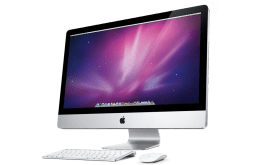
iMac My computer history, briefly, has been Acorn Electron, Amiga 500, various PCs running Windows 95, then ME and finally XP, which brings me to the machines I use now. I have an Eee-PC netbook (which for a year was my only personal computer). I experimented with a few Linux distros and eventually settled on CrunchBang Linux.

I also bought an iPhone 3G in this period, which eventually helped me decide to buy a 27″ iMac, which I think is absolutely fantastic. Continue reading

WikiReader

WikiReader The WikiReader is a funky Hitch-Hikers Guide style gadget that gives you Wikipedia in your pocket. I love the form, the touchscreen, the low power consumption, the low price and that it uses a MicroSD card. You can subscribe to bi-annual updates and they will post you the cards, or you can download the (4GBs of) data yourself.

I’m waiting for an e-reader gadget like this, but the size of a paperback, that allows you to put any data on the card to read. Ideally running some flavour of Linux. And none of this copy protection nonsense!

That’s all I want. Continue reading

Link

Mark Shuttleworth has kicked up a bit of a storm by apparently saying that Linux was “hard to explain to girls”. There is an open letter post about this on the Geek Feminism Blog, followed by a hell of a lot of comments on the subject. It seems to boil down to ‘he didn’t really mean it like that‘, ‘it’s not okay to say that kind of thing, even if you didn’t mean it like that‘ and ‘has anyone seen this video or a transcript anyway?

Anyway, I’ve made a little graphic that Ubuntu could use for their 11.10 release if they wanted to tackle this issue. :)

(Please note this was produced with a high level of sarcasm and irony. If you are offended, please look up those words before commenting!)

Continue reading

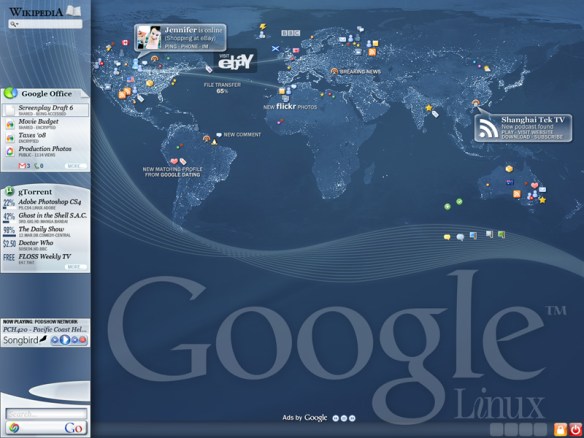
GUI design for a Google OS

Image

Last night I stumbled across this Photoshop mockup I have 2/3rds completed of a potential GUI for a Google operating system. This was created before Android, Chrome and Wave existed (as far as anyone knew) and is based on nothing but my own thinking.

I rather like the look of it, so I'm going to finish it off over the next few lunchbreaks. You’re welcome to share any thoughts you have on the subject in the comments.

Fast Dial: A great Firefox add-on goes bad

Fast Dial is a great little Firefox add-on that gives you the speed dial functionality found in Opera. Rather, I should say it was a great add-on. I have just this minute updated to the latest version (2.15) and been greeted by some rather unwelcome modifications:

  • An unwanted searchbox has found its way to the top of the page
  • A sponsored link has been added in place of one of my shortcuts
  • Another tab has been taken up to take me to the User Logos website
  • The User Logos search engine has been added, as default, to my search bar

I followed the link from the Firefox add-on page to the official homepage of the project, only to be redirected and have pop-ups thrown at me (blocked, naturally). It seems reasonable to conclude that this add-on has been monetized by a team that didn’t know how to do it tastefully and respectfully (or the project was co-opted by the spam mafia!)

Speed Dial is an alternative that I have used before. I prefered Fast Dial for its simplicity, but I guess I will give Speed Dial another look.

I hate the command line!

So, on Windows, if I want to move the My Documents folder elsewhere, I dig around in the settings and find out how to do that. It's a little buried away, but you can find it logically enough.

But if I want to do the same trick with my /home directory in Linux, I have to type in some gibberish. Now cutting and pasting isn't hard, but if it goes wrong (like it just did) then I'm none the wiser. What went wrong? How do I fix it? I'm left running back to Google, or begging for help in forums, to probably be ignored.

Two steps in a GUI or freaking ten lines in terminal!

There's plenty I love about Linux, but this shouldn't be the trade-off…

Help me improve the @datahole feed!

Firstly, I need to find some good sources. I’m starting with the Open Rights Group (data protection tag) and The Register (Security / ID tag). I’d look at the EFF, but they seem to be down at the moment. I’m also using a Twitter Search feed for #datahole. I’m open to any and all suggestions for good news sources. I’m hoping the Twitter and Identica community will contribute other valuable links and commentary too.

Some of these feeds should probably be filtered using keywords like lost, personal and data. Suggest any more?

Secondly, I need a plumber. Well, not exactly! I’ve used Yahoo! Pipes for some pretty basic stuff before, but for some reason, I can’t seem to get the Reg stories to mix in with the other feeds. I think it’s because their pubDate is formatted differently, but I don’t know how to fix that. I’ve published the pipe. Please, have a look and feel free to rewire the feed.

It’d be nice to make some other tweaks too. I’d like to cite the source at the start of the tweet (eg: [EL REG]), and strip out all the other gubbins, so each post becomes: [SOURCE] Headline – Link.

Click for the Datahole 0.5 pipe

An introduction to Open Source

Open Source has been around in spirit for a long time, but it became what it is today thanks largely to Richard Stallman, hacker, software freedom fighter and beard wearer. RMS wrote the original GPL (GNU General Public License), which outlines the principles of free software. Starting in true geek style with freedom zero:

  • The freedom to run the program, for any purpose (freedom 0).
  • The freedom to study how the program works, and adapt it to your needs (freedom 1). Access to the source code is a precondition for this.
  • The freedom to redistribute copies so you can help your neighbor (freedom 2).
  • The freedom to improve the program, and release your improvements to the public, so that the whole community benefits (freedom 3). Access to the source code is a precondition for this.

Linus Torvalds wrote the Linux kernel in 1991. Rebel Code has a pretty good account of this, and also covers the whole history of the open source movement. Worth a read.

The internet has benefited greatly from the so-called LAMP stack, a collection of open source software that makes websites reliable and dynamic. Wikipedia breaks it down as follows:

  • Linux, referring to the operating system;
  • Apache, the Web server;
  • MySQL, the database management system (or database server);
  • PHP, the programming language.

You may not realise it, but if you use the internet you have already benefited a great deal from open source.

Although Google doesn’t release much open source material directly, it is a big proponent of OSS, and practices what it preaches. Most Google employees run Linux (specifically, a tweaked version of Ubuntu called Goobuntu), and it is often rumoured that A Google Linux distro may be in the works. Although Google denies this, such a big name behind Linux could be just what is needed to move Linux to the mainstream.

And a big name is what Ubuntu has in Mark Shuttleworth. He made his billions in the dot com boom and became the second space tourist (and the first African in space).

The money he has poured into Ubuntu has helped make it one of the most user friendly distros – and certainly the most publicised. Now with it’s ‘Gutsy Gibbon’ release (7.10) it has added flashy 3D effects, desktop search, encryption and other advanced security features.

See also…

Software Picks

The Big Ones

I’m not going to go into much detail on these since they are so well known.

  • Mozilla’s Firefox, Thunderbird and Sunbird. Replaces Internet Explorer, Outlook Express and Outlook’s calendaring features.
  • Open Office. Replaces Word, Excel, Powerpoint and Access, with a few extra goodies thrown in. IBM have recently released the new Lotus Symphony suite, which includes a documents, presentation and spreadsheet editor all in one app. I’ve been using it for a few weeks now, with only minor issues. It’ll be in Beta for a while, but mark it down as one to watch. Could wind up being an OOo killer!
  • GIMP is the GNU Image Manipulation Program. It is a freely distributed piece of software for such tasks as photo retouching, image composition and image authoring. It works on many operating systems, in many languages.
  • Alternatively try GIMPshop, a modification of the free/open source graphics program GNU Image Manipulation Program (GIMP), intended to replicate the feel of Adobe Photoshop. Its primary purpose is to make users of Photoshop feel comfortable using GIMP.
  • Ubuntu is by no means the only Linux distro out there, but it is currently getting the most press. With Gutsy Gibbon (7.10) hot off the presses it has added some of the glitz and glamour of commercial OSes, like Vista and OSX. Available in many variations and for all platforms, 32 and 64 bit, desktop and server variations, and now super easy to install (or test by running from a live CD), I can honestly see no reason why a basic PC user would need Windows!

Other Cool OSS

  • Audacity is free, open source software for recording and editing sounds. It is available for Mac OS X, Microsoft Windows, GNU/Linux, and other operating systems.
  • Scribus is an open-source program that brings award-winning professional page layout to Linux/Unix, MacOS X, OS/2 and Windows desktops with a combination of “press-ready” output and new approaches to page layout. Underneath the modern and user friendly interface, Scribus supports professional publishing features, such as CMYK color, separations, ICC color management and versatile PDF creation.
  • FileZilla is a free FTP client for Windows, with Mac and Linux versions on the way.
  • VirtualDub is a video capture/processing utility for 32-bit Windows platforms. It lacks the editing power of a general-purpose editor such as Adobe Premiere, but is streamlined for fast linear operations over video. It has batch-processing capabilities for processing large numbers of files and can be extended with third-party video filters.
  • Notepad2 is a fast and light-weight Notepad-like text editor with syntax highlighting. This program can be run out of the box without installation, and does not touch your system’s registry.
  • Also Notepad++, another source code editor and Notepad replacement, which supports several programming languages, running under the MS Windows environment.
  • Password Safe is tool that allows you to have a different password for all the different programs and websites that you deal with, without actually having to remember all those usernames and passwords. KeePass is another alternative.
  • Toucan is a small utility allowing you to synchronise, backup and secure your data with more options than the built in suite utilities. It is split up into 5 tabs, allowing you to easily find the function that you want.
    If running applications off a portable hard drive or USB stick is news to you, check out Portable Apps for Toucan, Firefox, Notepad++ and many more OS apps.
  • TrueCrypt creates a virtual encrypted disk within a file and mounts it as a real disk. It can encrypt an entire hard disk partition or a storage device such as USB flash drive. An essential piece of software to protect sensitive data.
  • Miro (formerly the Democracy Player) is a free video platform with a mission to build a more open and diverse world of online video. RSS, BitTorrent, HTTP, HTML, and CSS are all open technologies that they use to create a level playing field for video creators to distribute their work and for viewers to connect to any publisher in the world.
  • Media Player Classic (MPC) is a compact free software media player for Microsoft Windows. The application mimics the look and feel of the old, light-weight Windows Media Player 6.4 and uses a completely different codebase, integrating many options and features found in modern media players. (Click the downloads tab and look for Media Player Classic)
  • VLC media player (Video Lan Client) is a highly portable multimedia player for various audio and video formats (MPEG-1, MPEG-2, MPEG-4, DivX, mp3, ogg, …) as well as DVDs, VCDs, and various streaming protocols. It can also be used as a server to stream in unicast or multicast in IPv4 or IPv6 on a high-bandwidth network.
    Between MPC and VLC, you should never download a video file you can’t play again!
  • Juice is the premier podcast receiver, allowing users to capture and listen to podcasts anytime, anywhere.
  • HandBrake is an open-source, GPL-licensed, multiplatform, multithreaded DVD to MPEG-4 converter, available for MacOS X, Linux and Windows.
  • Blender is the free open source 3D content creation suite, available for all major operating systems. A killer app for many, but possibly too complex for the casual movie. It’s well worth checking out Elephants Dream, the world’s first open movie, made entirely with open source graphics software such as Blender, and with all production files freely available to use however you please, under a Creative Commons license. (Follow the production of the second project, Peach)

Web Based Open Source

Just a taster.

  • Vanilla is an open-source, standards-compliant, multi-lingual, fully extensible discussion forum for the web. Anyone who has web-space that meets the requirements can download and use Vanilla for free!
  • WordPress is a state-of-the-art semantic personal publishing platform with a focus on aesthetics, web standards, and usability – according to the blurb on the frontpage. Basically it’s a blogging platform, and it’s free.
  • Drupal is a free software package that allows an individual or a community of users to easily publish, manage and organize a wide variety of content on a website.
  • For a more complete run-down of open source content management systems, and the option to try them all out, take a look at Open Source CMS.
  • Creative Commons defines the spectrum of possibilities between full copyright — all rights reserved — and the public domain — no rights reserved. The licenses help you keep your copyright while inviting certain uses of your work — a “some rights reserved” copyright.
  • Open Clip Art Library is an archive of user contributed clip art that can be freely used.
  • OSWD and Open Source Web Design – Two different sites that offer a large number of hight quality web templates, all released under some open licence.

Lists like this are abundant on blogs and frequently pop up un sites like Digg. Do a quick Google and drink from the firehose. Welcome to Open Source Software.