Informationless graphics

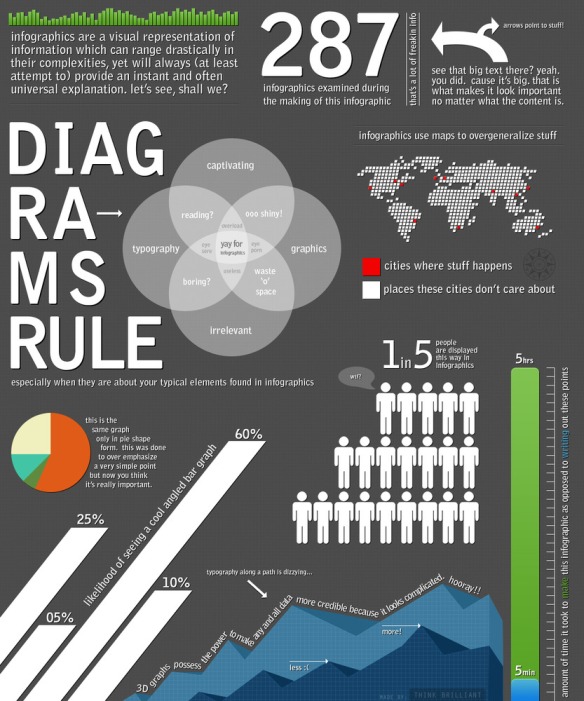
A picture is worth a thousand words right? But what about a picture AND a thousand words? Whoa. You may just have an infographic on your hands.

From airline safety manuals to complex data visualizations, I have always been fascinated by infographics. A well done infographic has the power to capture one’s acute attention span and convey information that would have taken longer to simply read (oh no, not reading!). However, for every brilliantly thought out and well executed mashup of art and data, there now seems to be an influx of mundane and formulaic counterparts infesting the very internet that we hold so near and dear.

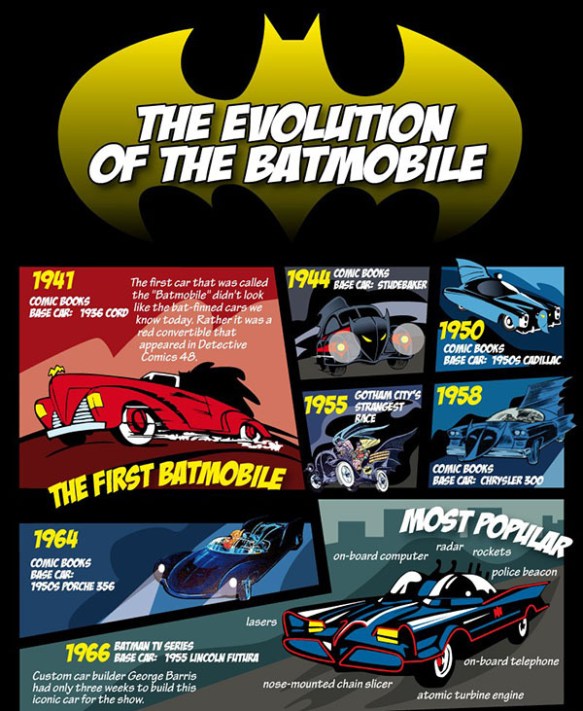
(via An Intimate Look at Infographics – thinkbrilliant.com)

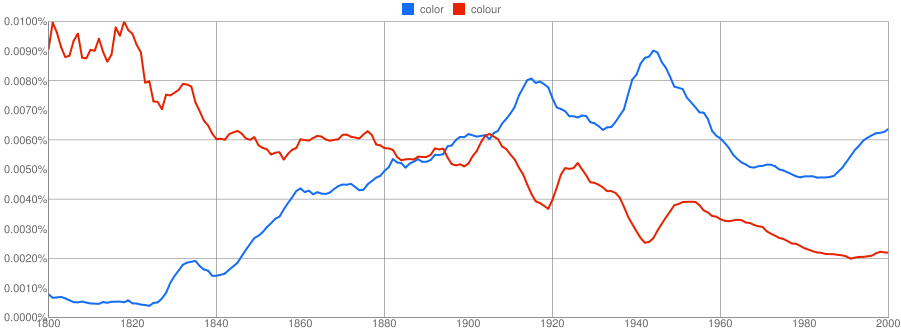
The backlash against pointless infographics has begun. Let’s speed this one along…

If you type two spaces after a full stop, you’re doing it wrong. Period.

Every modern typographer agrees on the one-space rule. It’s one of the canonical rules of the profession, in the same way that waiters know that the salad fork goes to the left of the dinner fork and fashion designers know to put men’s shirt buttons on the right and women’s on the left. Every major style guide—including the Modern Language Association Style Manual and the Chicago Manual of Style—prescribes a single space after a period. (The Publications Manual of the American Psychological Association, used widely in the social sciences, allows for two spaces in draft manuscripts but recommends one space in published work.) Most ordinary people would know the one-space rule, too, if it weren’t for a quirk of history. In the middle of the last century, a now-outmoded technology—the manual typewriter—invaded the American workplace. To accommodate that machine’s shortcomings, everyone began to type wrong. And even though we no longer use typewriters, we all still type like we do. (Also see the persistence of the dreaded Caps Lock key.)

The problem with typewriters was that they used monospaced type—that is, every character occupied an equal amount of horizontal space. This bucked a long tradition of proportional typesetting, in which skinny characters (like I or 1) were given less space than fat ones (like W or M). Monospaced type gives you text that looks “loose” and uneven; there’s a lot of white space between characters and words, so it’s more difficult to spot the spaces between sentences immediately. Hence the adoption of the two-space rule—on a typewriter, an extra space after a sentence makes text easier to read. Here’s the thing, though: Monospaced fonts went out in the 1970s. First electric typewriters and then computers began to offer people ways to create text using proportional fonts. Today nearly every font on your PC is proportional. (Courier is the one major exception.) Because we’ve all switched to modern fonts, adding two spaces after a period no longer enhances readability, typographers say. It diminishes it.

(via Space Invaders – Why you should never, ever use two spaces after a period – slate.com)

Amen.

Natural Born Clickers: 50% drop in ad clickers

Heavy, Moderate, Light Display Ad Clicker Analysis
March 2009 vs. July 2007
Total U.S. – Home/Work/University Locations
Source: comScore
  Share of All Internet Users Share of Click-Throughs
Jul-07 Mar-09 Jul-07 Mar-09
Total Clickers 32% 16% 100% 100%
Heavy Clickers 6% 4% 50% 67%
Moderate Clickers 10% 4% 30% 18%
Light Clickers 16% 8% 20% 15%
Non-Clickers 68% 84% 0% 0%

[…]

“A click means nothing, earns no revenue and creates no brand equity. Your online advertising has some goal – and it’s certainly not to generate clicks,” said Starcom USA SVP/Director, Research & Analytics John Lowell. “You want people to visit your website, seek more information, purchase a product, become a lead, keep your brand top of mind, learn something new, feel differently – the list goes on. Regardless of whether the consumer clicked on an ad or not, the key is to determine how that ad unit influenced them to think, feel or do something they wouldn’t have done otherwise.”

(via comscore.com)

According to this, 8% of users are doing 85% of the clicking. Given that most email in circulation is spam, these few gullible clicker people have ruined the internet for everyone else…

So you found something cool on the internet…

So you found something cool on the internet...

Loldwell and Rosscott created this handy “So you found something cool on the Internet” comic flowchart to help encourage proper attribution of people’s work found on the Internet.

“See Something? Cite Something.” Amen brother!

Help support these awesome guys by buying one of their t-shirts or posters.

(via Comic Flowchart That Encourages Attribution of Work Found Online – laughingsquid.com)
Continue reading

Link

This slideshow requires JavaScript.

A while ago I asked if there were any good fractal generator apps for the Mac.

I’ve found Oxidizer so far, but it looks a little limited (although I haven’t actually tried it yet).

Well, I was wrong. It’s brilliant. I’m hoping to produce a series of images using it, and maybe even some animations. I’ve also installed Electric Sheep as my screensaver (multiplatform).

[Previous post]

Product placement in movies

[…] did you know the “All restaurants are Taco Bell” scene in Demolition Man was replaced with a horribly-dubbed version that said “Pizza Hut” for the European version?  Or that one of the biggest product placement whores of all time is Michael Bay?  Okay, that second one you probably already knew.

via A Brief History of Conspicuous Product Placement in Movies – filmdrunk.uproxx.com

Wilson

Product placement has a place in movies and television. I’d rather see Michael J. Fox slurping from a Pepsi than have the narrative broken for a few minutes for a commercial break.

Sadly you tend to get both. We’re going to be seeing much more placement in the future too, as advertisers want to be able to market to those who torrent or TiVo their television shows.

Continue reading

Fade In: The Writing of Star Trek: Insurrection

Links abound in this post, but dig in if you’re a Star Trek fan as there’s lots of insights and revelations into the production of one of the most unfairly dismissed Star Trek films. I actually rate Insurrection as one of my favourite Next Gen movies, but there’s no doubt it felt like a heavily compromised entry. An unpublished book by the late Michael Piller, Fade In: The Writing of Star Trek: Insurrection, tells the story.

“They’re not out to make a quick buck, they’re looking to protect the integrity of the franchise and its mythology.” 1998’s Star Trek Insurrection went through a number of different plots before becoming the film we ultimately saw. Starting out as Star Trek: Stardust, the first take on the idea involved Captain Picard going all Heart of Darkness on a former friend from his Starfleet Academy days in a bid to find the Fountain of Youth. That treatment evolved into a remarkably Avatarish story called simply Star Trek IX in which Picard must go upriver to kill a malfunctioning Data as part of a Federation/Romulan alliance to displace strange alien natives from a planet teeming with a valuable and rare ore (spoiler: Picard actually kills Data in this treatment, and Tom Hanks was supposed to have a major role somewhere).

(via “He might have read the document when he was tired, at the end of a long day of being tied to a whale.” – metafilter.com & via Boing Boing)

The PDF of the book was originally released by Trek Core. They included this note:

When 
we 
received
 this 
submission, 
we
 were 
told 
that 
Michael 
Piller 
considered 
this 
book
 his
 last 
great
 gift 
to
 the 
fans
 and
 to 
aspiring
 writers 
everywhere. 

Unfortunately,
 Paramount
 somehow
 got 
it 
suppressed
 from 
being 
published. 

Michael
 Piller 
passed
 away
 in
 2005, 
so
 getting 
this
 book 
published
 will 
never 
be
 possible
 (not 
to 
mention
 Insurrection 
is 
quite 
old
 now, 
so 
a 
book 
about 
it 
wouldn’t
 be 
financially 
feasible 
for 
a
 publisher). 

It’s 
clear 
Michael 
Piller
 wanted 
this 
book 
read, 
so 
we
 felt 
that 
making 
it
 available 
to 
the 
fans 
made
 sense. 

It’s
 an
 amazingly 
detailed 
look 
at 
the 
process 
of 
writing 
the 
movie 
including 
internal 
memos, 
letters, 
pitches, 
story
 drafts, 
etc. 

Enjoy 
this
 unique
 glimpse 
into 
writing 
Star 
Trek 
Insurrection! 

And 
lastly, 
if
 anyone 
can 
provide 
the
 draft 
of 
Star 
Trek 
Insurrection 
that 
is 
missing 
from 
this 
document,
 please
 email 
us.

Continue reading

Could Facebook be around forever?

Douglas Rushkoff is absolutely right, Facebook will go down. It’ll be another long decline that – like AOL and Yahoo! – will still be hugely profitable and popular in the mainstream for years after its prime.

[…] These companies are being valued as if they will be our permanent means for identifying ourselves.

Yet social media is itself as temporary as any social gathering, nightclub or party. It’s the people that matter, not the venue. So when the trend leaders of one social niche or another decide the place everyone is socializing has lost its luster or, more important, its exclusivity, they move on to the next one, taking their followers with them. […]

We will move on, just as we did from the chat rooms of AOL, without even looking back. When the place is as ethereal as a website, our allegiance is much more abstract than it is to a local pub or gym. We don’t live there, we don’t know the owner, and we are all the more ready to be incensed by the latest change to a privacy policy, or to learn that every one of our social connections has been sold to the highest corporate bidder.

So it’s not that MySpace lost and Facebook won. It’s that MySpace won first, and Facebook won next. They’ll go down in the same order.

(via Facebook hype will fade – edition.cnn.com)

Maybe not though… I wonder if Facebook could become the Arcadia Group of the web. Maybe the next big social networking site could be… Facebook. Sort of. Just like most of the big high street retail brands are owned by the same few companies, Facebook would be the parent company of many federated niche-networks.


Tweaking Twain

A new edition of the Adventures of Huckleberry Finn, scheduled to be published in February by NewSouth Books, substitutes the word “slave” for the “n-word” and “Indian” for “injun” throughout the book.

The publisher has been accused of censorship and altering a classic of American literature for the sake of political correctness. Early argues that this is just another case of tinkering with texts in order to create a version that best serves its audience.

Continue reading

How Andrew Plotkin raised $31,337 on Kickstarter

There’s no easy answer here. Andrew ‘Zarf’ Plotkin is a big name in interactive fiction, and without his reputation backing up his idea, it would probably have failed. Still, he has some smart suggestions:

Some subjective factors that I can’t measure, but which I’m sure helped:

  • Say up front what you want to do, why you want money, and how that money will be converted into something awesome. (A list of features is not exciting, of itself. Describe an experience.)
  • Have a great video. I wrote a script, and then my co-conspirator Jason McIntosh and I whaled over it. Jason threw away a bunch of stuff and added a bunch of stuff; then we filmed it. Twice.
  • Think about your audience and who wants what. I have contributors who want an iPhone game, contributors who want interactive fiction, contributors who want to support my open-source projects, and contributors who want to support me. These are not all the same people. Rewarding all of these groups appropriately is non-trivial, and there has been some discussion about the way I did it.
  • For a game project, include a demo. (I realized this only barely before launch-day! The demo that I posted represents two intense weekends of work; I hope that’s a good omen for my production rate in 2011.)
  • Don’t be afraid to plug yourself and your CV. I know you’re all saying “how could you fail to promote yourself?!” but I had to be chivvied into it. (Thanks, Jason Scott.)
  • Contrariwise, don’t be a jerk. Actively don’t be a jerk. Say thank you to everybody, early and often.

via Andrew Plotkin: How I raised $24,000 on Kickstarter – money.cnn.com

Related: Hadean Lands: Interactive Fiction for the iPhone – kickstarter.com

Casio Tryx / Fujifilm FinePix X100

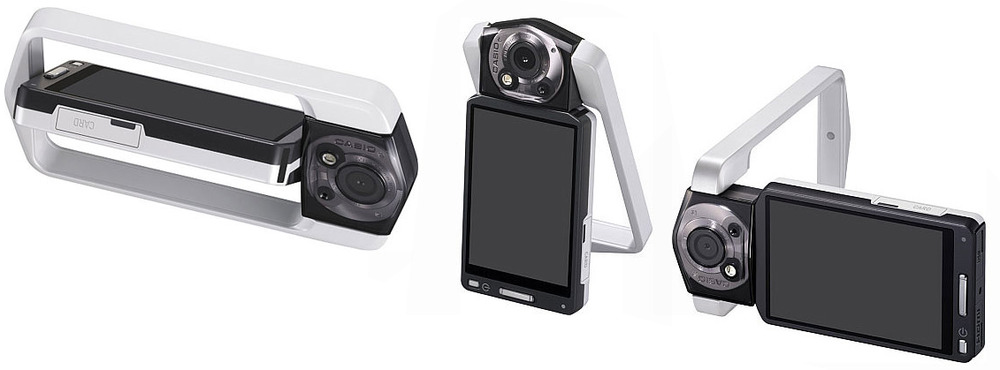
This is a novel form factor for a point-and-shoot. If anyone gets serious about making an open source camera, they should definitely try something inventive like this.

The design of the “variable frame” allows it to act as a sort of tripod, giving you steadier shots for video or low-light exposure and giving you one less thing to carry. Another odd feature is that the lens is not a zoom, but instead a fixed wide-angle.

(via Casio goes innovative with Tryx camera desig – core77.com)

I’m not really sure the benefits are worth the hassle though. The thing is almost like a puzzle!

Engaget has some specs.

The 12.1 megapixel shooter sports what the company’s calling Exilim Engine HS, which equates to 1080p 30 frames per second video, up to 240fps (at 432 x 320 resolution) slow-motion, and various HDR and panorama options. there’s also a 3-inch touchscreen LCD, but the biggest draw here is the swiveling enclosure that serves as a stand for setting up just the right shot. We got an early glimpse at a non-functional prototype, and the size is definitely interesting — we still need to see it in action, though. Price is a penny shy of $250 and shipping date’s April 2011.

(via Casio’s Tryx pocket camera takes a stand (literally) alongside new Exilim lineup – engadget.com)
Continue reading

10 innovative business models of 2010

Here’s a handy list of the business models featured:

  1. Kickstarter.com
  2. Airbnb.com
  3. Quirky.com
  4. Free with in-app sales
  5. HumbleBundle.com
  6. PayWithaTweet.com
  7. Spotify.com
  8. Groupon.com
  9. Flattr.com
  10. PatientsLikeMe.com

Not every interesting revenue model was included. Some of course missed our selection. I personally didn’t choose penny auction concepts like Swoopo and others. People that joined one of our workshop sessions knew already that these concepts are quite fraudulous. Auction platforms like this aren’t very sustainable. Recent figures already showed that Swoopo is indeed in decline. Other emerging concepts like Quora aren’t on the list either. Although everybody is talking about this relative new content platform, they didn’t figure out what business model to roll out. Sounds very Twitterish, not? If I had to include 1 extra revenue model to this selection, I would go for Gilt.com, which has another interesting approach for selling ‘online deals’. Read more about their margins, cash conversion and so on here.

via 10 business models that rocked 2010 – boardofinnovation.com

I’ve blogged about the Humble Indie Bundle before. Kickstarter really does deserve to be at the top of that list. Though you can support projects from anywhere in the world, you have to be in the US to raise funds. There are lots of imitators though, including IndieGoGo. Flattr is a concept I’m probably going to try out soon too.

Continue reading

Magic Lantern: Firmware for Canon DSLR filmmakers

Magic Lantern is an open platform for developing enhancements to the amazing Canon 5D Mark II and 550D/T2i digital SLRs. These cameras are “game changing” for independent film makers:

  • It allows the use of a wide range of lenses (anything that can be adapted to the EF mount).
  • The 5D’s 35mm full-frame sensor is larger than the RED ONE’s sensor, Super 35 film. It is approximately the size of VistaVision. This means shallower native depth-of-field than anything on the market, except for the Phantom 65.
  • The dynamic range and latitude are close to the capabilities of high-end HD cameras.
  • The low-light performance is currently unrivaled, even by the RED ONE.

But, the software in video mode has limitations, even after the recent 1.1.0 upgrade from Canon that fixed the most glaring manual exposure “bug”.

That’s where Magic Lantern comes in — it turns your 5D Mark II into a 5D Mark Free. We’ve written extensions and widgets that fix many of the annoyances in working with the 5D Mark II on a film or video set. Our first set of fixes are targeted at the audio limitations of the camera, but there are some video enhancements included, too:

  • On-screen audio meters
  • Manual gain control with no AGC
  • Zebra stripes (video peaking)
  • Custom Cropmarks for 16:9, 2.35:1, 4:3 and any other format
  • Control of focus and bracketing

(via magiclantern.wikia.com)

How cool is this! Though the (slightly cringeworthy) video above talks specifically about the 5D, there is also firmware for the 550D I use, which could open up a world of possibilities.

Continue reading

Link

Reddit has an interesting ask me anything thread running at the moment: I run ThatHigh.com and it pays my rent in San Francisco. AMA. Someone asked how the owner built up traffic and established the advertising, prompting a candid reply…

How to build a social entertainment website:

  1. Build site
  2. fake lots of user activity
  3. steal a tiny bit of content from all around the internet
  4. reddit ads ($20)
  5. stumbleupon ads ($5)
  6. put easily shareable links on each story side note: I put facebook “like” buttons on each story when they unveiled their opengraph stuff and facebook referrers skyrocketed, so that was awesome.

For advertisers, I literally email them out of the blue. I had a seed seller in the UK for awhile that didn’t pan out, so he quit. I’ve had lots of humor sites advertise, some hydroponics stuff, and while prop 19 was under the media’s eye, adsense was giving me TONS of high CPC ads. I made $3k during that time period in one month. It was nice.

I use Google Doubleclick for Publishers to manage ads, I use freshbooks (the free plan) to charge advertisers with my paypal and google checkout accounts. One time someone wired me money from the UK.

Continue reading