Fixing film and TV distribution

Guy English has some suggestions for Apple. If Apple aren’t working on fixing film and TV distribution, I hope someone else is working to make this vision a reality:

[…] If I watched the first season of Community via Netflix streaming and now want to rewatch it on my TV as fed from an Apple TV? Make it work. I don’t care how. If you want to pop up a dialog thats asks if you’ll charge me $4.99 to $9.99 for the privilege, I’d pay. Let me pick what I want to watch, regardless of the source, and let me watch it. I have very little allegiance to the network that funded the show — I want the content. Figure out how to make that work.

If you can’t figure out how to make that direct connection to the creatives then you’ll always be stuck with a middleman that doesn’t have to be there. If there’s a syndication avenue you can explore then do so.

Fans want to watch their shows. They’ll pay to make that happen. Everything else is mired in entrenched interests. Find a way to make that happen and we’ll all agree that Firefly jumped the shark during its seventh season.

Films and TV shows need to be apps and websites, primarily. I’m never going to buy another cable package and pay for hundreds of channels I don’t care about to get the few shows I want, with adverts, weeks or months after they have already been broadcast elsewhere.

I just want to watch my show.
Taiwanese animated news NMAtv report on Monmouthpedia

The Monmouthpedia project has been getting a lot of coverage lately, but you know they’ve made it when Next Media Animation feature them:

Monmouth is now a “Wikipedia town,” which means it’s riddled with QR codes that bring information to smartphone users with the click of a button. Monmouth, birthplace of King Henry V, is the first town to play host to project, hence the title, “Monmouthpedia.”

Wikipedia founder Jimmy Wales said he was excited about the project. “Bringing a whole town to life on Wikipedia is something new and is a testament to the forward-thinking people of Monmouth,” raved Wales.

The QR codes are printed on long-lasting plaques to ensure they’ll be around for a while. Wikipedia will be using QRpedia, a mobile Web based system that uses QR codes to deliver Wikipedia articles to users. As articles can be instantly edited and updated, some believe this will be a good replacement for tour guides and maps.

Previously on Halfblog.net

Link

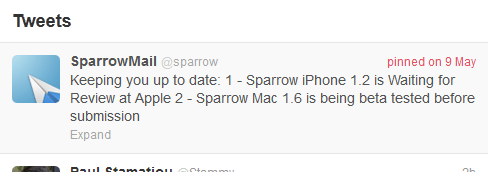
I like this suggestion for pinned tweets from Alex Pankratov:

The idea is to reserve the top part of my tweet stream for tweets that are promoted, or pinned, by their posters. This way if I go on a vacation and a vendor ships an update, I will still see the news when I get back:

Pinned tweet mockup

Once a pinned tweet is shown to me, it starts dropping down in my timeline as usual. Think of it as a delayed, on-demand tweet delivery.

I’d propose a variation of this idea though — perhaps pinned tweets could be generated from the tweets that people I follow are favouriting and retweeting a lot. Many people use favourites to bookmark tweets they want to follow up on, so Twitter could encourage this behaviour, perhaps by changing favourites into pins. Continue reading

Apple insecurity questions

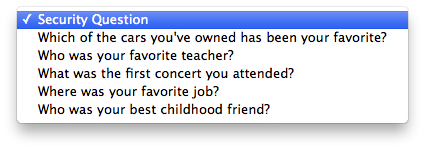
Apple has been prompting me to add some additional security to my account for a while now, and I’ve actually put off some purchases simply to avoid answering these questions…

Continue reading

The Russians used a pencil

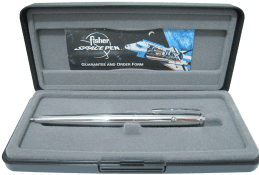
Fisher AG-7 Space Pen

Fisher AG-7 Space Pen

“In the 1960’s NASA spent many years and millions of taxpayer dollars developing a special ‘space pen’ that uses nitrogen-pressurized ink cartridges to work in zero gravity, in a vacuum and at extreme temperatures ranging from -50 F to +400 F.

“The Russians used a pencil.”

This story keeps cropping up as an example of bureaucratic waste, or specifically as an example of what a colossal waste of money the space programme has been. It has been circulating the internet as fact since the mid ’90s, and even fictional White House Chief of Staff Leo McGarry made the claim in a 2002 episode of the West Wing.

This Million Dollar Space Pen story is a pure fabrication however. The space pen was developed not by NASA, but by businessman Paul C. Fisher. It was only adopted by NASA after years of testing and the costs of developing the pen were never passed on to the US government. Furthermore, detritus from wooden pencils presented a potential hazard in microgravity, and Soviet Union would later adopt the Fisher space pen also. Continue reading

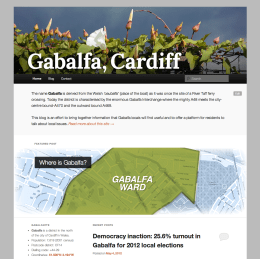
A new hyperlocal blog for Gabalfa, Cardiff

Gabalfa blog This week I created a new Cardiff hyperlocal blog for the Maendy, ‘Lower Heath’, western-edge-of-Cathays area known to the council as the ward of Gabalfa.

It’s a funny area to cover. Wikipedia says Gabalfa “is characterised by an enormous fly over road at the Gabalfa Interchange, where the A48 road meets the A470 road (North Road) which leads from Cardiff to northern Wales, and the A469 road (Caerphilly Road)”, which about sums the area up.

Continue reading

Election 2012: Gabalfa, Cardiff

I’m not really very political, but I thought it would be interesting to get a bit hyperlocal and see how much of a web presence my local wannabe counsellors have. (The actual hyperlocal blog for my area — heathlands.us — seems more interested in organising a street party and setting up a pirate radio station…)

Peter Law writing in WalesOnline says about the Gabalfa lineup:

A difficult ward to call. Lib Dem incumbent Ed Bridges is well regarded and increased his share of the vote four years ago. Labour has a lot of ground to make-up, but may well snatch one of the two seats up for grabs.

Based on their engagement online, these are indeed the only two parties who seem to have any interest in this little ward. Continue reading

Link

Watermarks are horrible. This is very smart.

How do you change perception of a billion dollar company? Not with advertising but by changing the very interface that made them less than popular in the first place. By changing their product.

A campaign by RG/A.

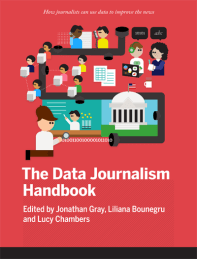
The Data Journalism Handbook

The Data Journalism Handbook is intended to be a useful resource for anyone interested in becoming a data journalist, or dabbling in data journalism.

Data Journalism Handbook cover It was born at a 48 hour workshop at MozFest 2011 in London. It subsequently spilled over into an international, collaborative effort involving dozens of data journalism’s leading advocates and best practitioners – including from the Australian Broadcasting Corporation, the BBC, the Chicago Tribune, Deutsche Welle, the Guardian, the Financial Times, Helsingin Sanomat, La Nacion, the New York Times, ProPublica, the Washington Post, the Texas Tribune, Verdens Gang, Wales Online, Zeit Online and many others.

Continue reading

Link

I was lucky enough to get one of the Port80 early bird tickets, so I’ll be there. Tickets are still available for £49, plus VAT.

Port80 website The talks will be on useful subjects like content strategy, site speed, project management, progressive enhancement, dealing with clients, native apps vs. responsive, personality on the web and more on responsive design. On the subject of responsive design, the newly launched Port80 website is a great example of exactly that.

You can follow @port80events for updates. The hashtag du jour is #p80N. You should also follow @Joel_Hughes who made this happen.

Kickoff is at 8:30 am on Friday 25th May 2012 at the University of Wales, Newport.

Waterstone’s Spy Games

Waterstones Oxford Street I’ve moaned before about the obnoxious ‘RT and/or follow us to win a free iPad’ marketing strategy on Twitter before, and I had another little moan today. It’s depressing that so many of the people I choose to follow see no problem with sending unsolicited spam my way for the outside possibility of winning something or other. It’s human nature I guess.

A little later, @WstonesOxfordSt demonstrated a different kind of Twitter marketing. If only more corporate Twitter accounts would follow their example.

Continue reading