Half Life: Singularity Collapse by Leonard Menchiari
Film suggested by Matt Creed

1921 directed by Buster Keaton. Buster is mistaken for a murderer with a price on his head.
Set in a future Fordian dystopia, a young man awakens from a deep Soma induced vacation. Soma being the state funded drug of choice for any self-respecting Alpha {and an escape from any reality-induced ailments of course}. It’s not a question of whether to take any more…it’s how far?
Here’s something quick and eyebrow-raising to boot this morning. A YouTube guitarist puts an iPhone 4 inside his instrument to capture some rarely seen footage of how the strings oscillate. The awesome effect is further amplified thanks to the way the iPhone 4′s shutter works, he explains in a video description:
I just happened upon this trick when testing what it was like filming from inside my guitar. Note this effect is due to the rolling shutter, which is non-representative of how strings actually vibrate.
Here’s something quick and eyebrow-raising to boot this morning. A YouTube guitarist puts an iPhone 4 inside his instrument to capture some rarely seen footage of how the strings oscillate. The awesome effect is further amplified thanks to the way the iPhone 4′s shutter works, he explains in a video description:
I just happened upon this trick when testing what it was like filming from inside my guitar. Note this effect is due to the rolling shutter, which is non-representative of how strings actually vibrate.
via Mesmerizing video shows how the iPhone 4 camera shutter works – 9to5mac.com
Way Back Home is the incredible new riding clip from Danny MacAskill, it follows him on a journey from Edinburgh back to his hometown Dunvegan, in the Isle of Skye.
Danny MacAskill – “Way Back Home”
Film suggested by Mark Spencer.

The CDC says that for the first time in history, lifestyle diseases such as diabetes are killing more people than communicable diseases,” Travis Bogard, Jawbone’s VP of product management, tells Co.Design. “We’re trying to solve that problem.” The Up’s sensors collect data about how much you’ve been sleeping and how much you’ve been moving. That data is then fed into a smartphone app, which also takes in information about your meals. (You enter meal data manually, in part by taking pictures of what you’ve eaten.) Based on all that information, the smartphone program provides “nudges” meant to help you live healthier, day by day. For example, if you haven’t slept much, when you wake up the app might suggest a high-protein breakfast and an extra glass of water.
I can see myself benefiting from one of these.
Chroma Feed is a showcase of the best short films on the web.
Hello and welcome short film fans! If you’ve been following this blog for a while already, I hope you’ve enjoyed the films I’ve featured. This blog has been on hiatus for a few weeks, but I’m back to work now with many more cool short films lined up, so please bookmark the site, follow @ChromaFeed on Twitter and get ready for action.
Many thanks to Matt at Jammy Custard for producing the slick ident above (and for suggesting some cool films).
After he tightened the site’s editorial standards and made other tweaks that didn’t change its fortunes, [HubPages chief executive Paul] Edmondson made a discovery. Google’s search engine had indexed some of HubPages content as being tied to “ww.hubpages.com” rather than “hubpages.com,” and the incorrectly indexed sites were ranking higher for certain search queries.
In May, Edmondson wrote an email to Google engineers about the discovery and asked whether he should break up his site into “subdomains,” where each contributor of content to HubPages would essentially have a separate website. That way, perhaps Google’s algorithm could distinguish which part of HubPages had original content and which part had lower-quality articles that were just copies of other content on the Web. Publishing sites such as WordPress, Tumblr and Google’s own Blogger are structured with subdomains, whereas Google’s YouTube and others are not.
In June, a top Google search engineer, Matt Cutts, wrote to Edmondson that he might want to try subdomains, among other things.
(via Site Claims to Loosen Google “Death Grip” – blogs.wsj.com)
Surely this is really bad news? Perhaps HubPages will be honest in how it organises content, but other sites won’t. I predict that keyword heavy subdomains will be the next big ‘SEO expert’ trend.

The inadequacies of the various ‘like’ buttons that appear all over the web have been noted before, but a post from Ed Walker tonight inspired me to mock up an idea I’ve had for a simple way to bring some more semantic meaning to these buttons. Ed says:
What is the recommended button there for? The equivalent of a Facebook like? A chance to show you appreciate the story, the author or the subject?
I’ve spotted a trend on WalesOnline, whenever we report the death of a young person […] we don’t get comments (very rarely) but we do get a lot of recommendations. Constantly in the most recommended lists, knocking rugby stars and political debates down a peg or two. Facebook is for posting the RIP messages and joining groups expressing your sorrow, sharing that grief with your friends, but local media sites are the way to show the wider world (outside of the Facebook login) that the death of a friend/relative is important to the community.
It seems in the case of the death of young people it’s a way of showing you care. It says to us as editors that you think this story is important, you’re showing us it should be high up the news list and it should be featured.
(via Generation grief: A modern way of letting go – edwalker.net)

This guide called The Free Museum San Francisco is a public art tour of the city designed and curated for Arkitip Intel’s Newspaper Supplement. The only caveat being that it requires a bit more will-power (or, ideally, a bike) to view. Each artist is distinguished by a unique pattern and demarcated in the legend of the map.
Side note: this was the first printing of Mike Abbink’s Milo Serif typeface, which holds its own on the page, even when competing with an eclectic mix of patterns. Kyle is hard at work on the annotated espresso version of the tour.
(via Free Museum San Francisco – everything-type-company.com)
Continue reading
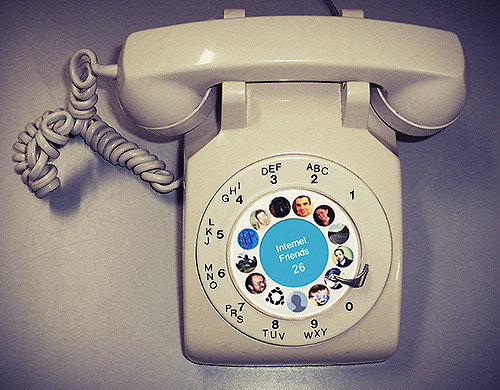
I don’t think the Circles feature of Google+ deserves the praise it’s getting. The circles themselves are gimmicky and lack utility. It’s good that Google is making privacy a selling point of G+, but I think that’s where the praise for circles should end.
A young filmmaker obtains a mysterious device that unleashes the full force of cinema on his front lawn.
A Love Story… In Milk by Catsnake (on commission from Friends of the Earth)
Continue reading
The last man on earth decides to take some drastic action.
Follow urban historian Steve Duncan to see the hidden sights and people of New York.
Shot on a canon 5d mkii with canon 24 f/1.4 (version 1) with the zacuto rapid fire, Zoom H4N and a sennheiser g2 wireless lav. The zacuto was really great at being there when I needed it but also staying out of the way.
A zero budget war film shot in 4 hours.
A few months ago I tweeted that we no longer needed to sell User Experience and our job was now to focus on delivering good user experiences.
These days we’ve stopped selling UX and started simply doing it.
Sure, some agencies or individuals haven’t quite reached that inflexion point yet, but I can tell you that it’s on the way. Demand is far outstripping supply, so if you’re not there yet, you soon will be. User Experience is no longer a point of difference, it’s just the way all good websites are built these days.
I don’t care about User Experience – andybudd.com
Hopefully in the very near future this shift in approach will happen for SEO too. There really shouldn’t be an SEO company or a marketplace of SEO ‘experts’. The work of SEO is half website design and development (good semantic markup, sensible layouts) and half content production (incorporating keywords, writing good titles and meta descriptions etc.). These skills should be in-house and standard practice.
An armadillo lives in a perfect world that is threatened when a hunter enters the scene.
Dilla by Mike Klim, Stanley Moore, Dominic Pallotta, Mikey Sauls Continue reading
 halfblog.net