Yearly Archives: 2012
Stop SOPA/PIPA!
Aside
WordPress.com are making it easy to black out your own website in protest of SOPA/PIPA. I realise that these are US bills, but the ramifications of such harmful legislation will be felt all over the world. If you are a US citizen, please take a stand!
“I have a dream”
I have a dream that one day this nation will rise up and live out the true meaning of its creed: ‘We hold these truths to be self-evident; that all men are created equal.”
Martin Luther King’s famous speech at the Lincoln Memorial, 1963. ©EMI/Sony!
Martin Luther King Jr.‘s “I Have a Dream” speech is considered one of the most recognizable collection of words in American history. It’s the rhetorical equivalent of a national treasure or a national park. The National Park Service inscribed it on the Lincoln Memorial and the Library of Congress put it into its National Recording Registry. So we might hold it to be self evident that it can be spread freely.
Not exactly. Any unauthorized usage of the speech and a number of other speeches by King – including in PBS documentaries – is a violation of American law.
Another tragic abuse of copyright. It’s hard to imagine anything more deserving of being in the public domain. Continue reading
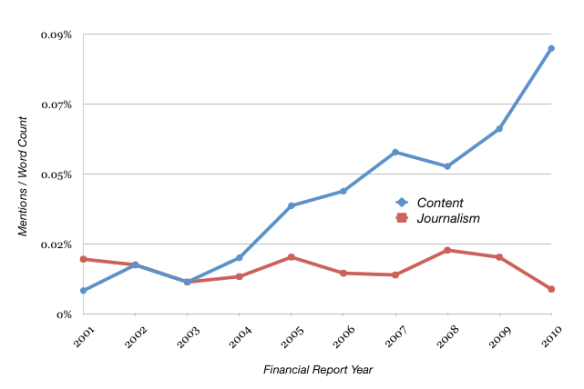
The Rise of “Content”
Drew Breunig on how journalism, writing, photography and art have become “content”.
Network
Information technology has become a ubiquitous presence. By visualizing the processes that underlie our interactions with this technology we can trace what happens to the information we feed into the network.
Infrequently used punctuation marks
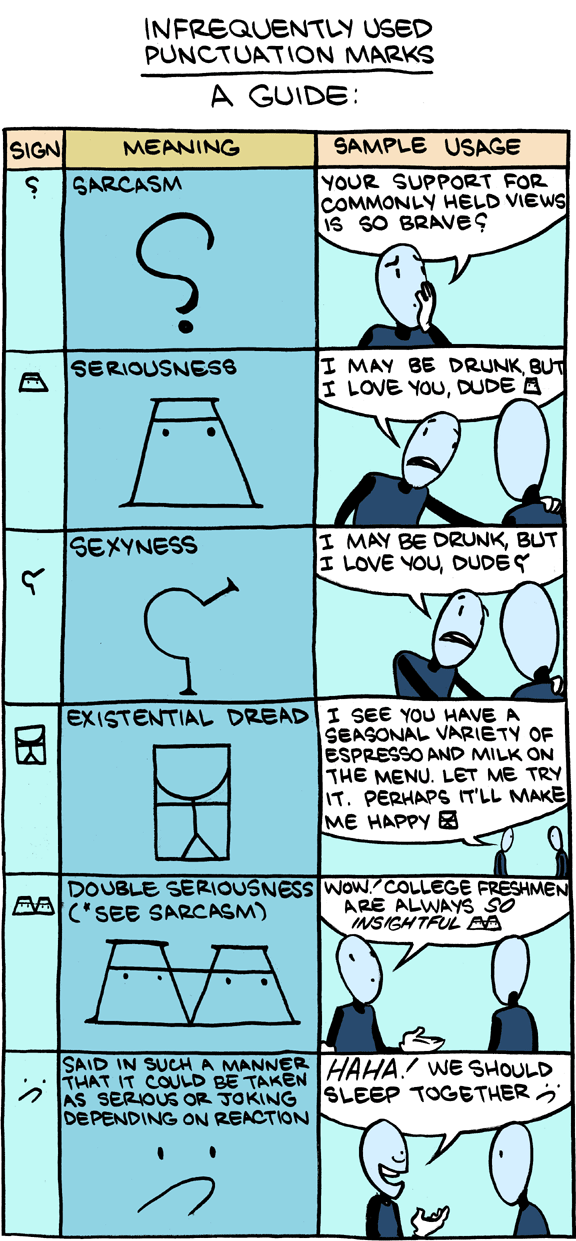
Fuck your infographic
Image
By Abe Garcia, The Honest Ape
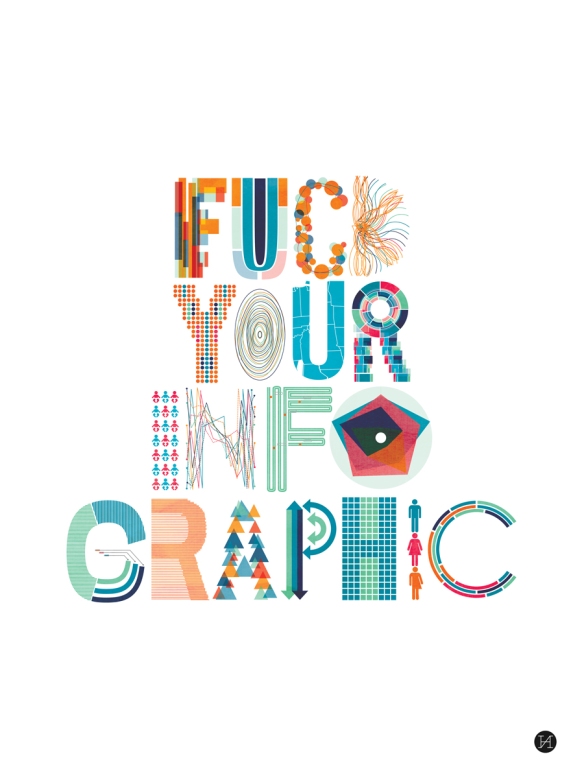
Calendar for Cardiff / Radical Cartography
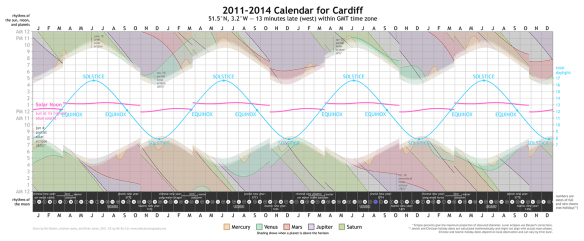
I’ve spent much of this evening browsing the incredibly fascinating material at Radical Cartography, where I made this calendar showing the years 2011-2014, daylight hours, when various planets will be visible in the night sky, daylight savings shifts, equinox and solstice points, lunar cycles and more. Continue reading
Kickstarter 2011, by numbers
Kickstarter have posted some facts and figures about their 2011, compared with 2010:
The largest categories continued to be Film ($32 million pledged) and Music ($19 million pledged), however Design saw the biggest growth in launched projects (235 in 2010 vs. 1,060 in 2011), Games saw the largest percentage increase in backers (up 730%), and Dance had the highest success rate (74%). All 13 categories saw at least $1 million in pledges.
I took the numbers and had a play to see if there were any interesting observations to be made. Continue reading
Making a unique map of Cardiff
Aside
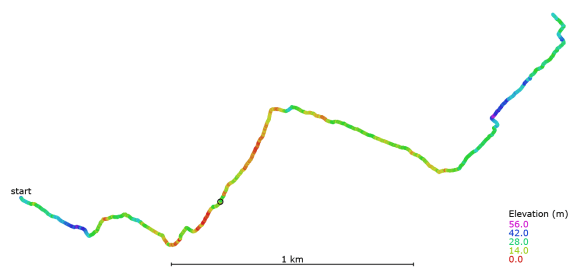
Above: My walk home, tracked with OSMTrack for iOS and converted into a SVG with GPS Visualiser.
I have an idea for a crowdsourced map of Cardiff: People send me their data (favourite places, sneaky shortcuts, hidden wonders or even GPX files of routes) and I’ll use it to build a unique map of the city.
Just a thought.
Church of Kopimism
Apparently file sharing is now recognized as a religion in Sweden:
In the midst of a worldwide debate about Internet piracy, Swedish authorities have granted official religious status to the Church of Kopimism, which claims it considers CTRL+C and CTRL+V (shortcuts for copy and paste) to be sacred symbols, and that information is holy and copying is a sacrament.
Open Domesday Book
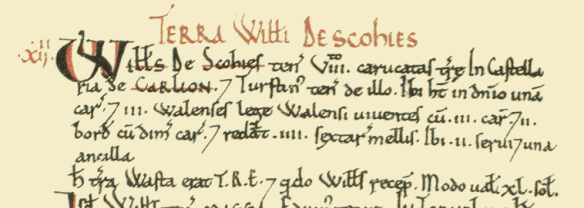
The Domesday Book, freely available online for the first time. You can search by place, name or simply browse the book.
Trends in independent documentary filmmaking
Affordable digital cameras, crowdfunding sites like Kickstarter and IndieGoGo, and video distribution sites like YouTube and Vimeo have all opened the door to a generation of new independent documentary filmmakers.
Many of today’s documentary filmmakers are making bold stylistic choices more often associated with narrative storytelling than documentary filmmaking and finding savvy new ways to engage audiences. By pushing the boundaries of what is considered traditional documentary filmmaking, they are stepping up to compete for the eyes of a generation raised on the often outrageous, unfiltered and unedited user-generated videos that can be found on YouTube and the conflict driven scripted Reality television that fills TV networks.
Stiffs: The Apocalypse Party
Stiffs is a five issue mini-series comic currently seeking funding on IndieGoGo. It’s produced in Cardiff, so if you think it sounds cool, give them some support.
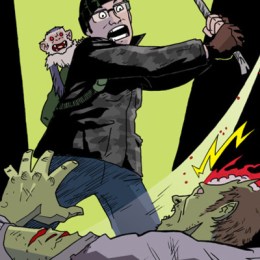
Set in a dead end town in the South Wales Valleys, it follows the adventures of working stiffs Don Daniels, and his monkey life partner (they’re just friends, really) Kenny McMonkey, as they discover that the undead stalk the valley at night. Raised on a steady diet of rubbish horror films and heavy metal, they do what any sane person would: become a pair of bad-ass, hard-living zombie hunters.
The perks are really great too: $20 gets you the whole series, another $5 gets them signed for you, but for $50 you get to commission the series artist to draw whatever you like, and $100 gets you a zombie-cameo in one of the comics!
They’ve already managed to raise $2,048 of the required $3,000, with 16 days still to go, so they’re right on target. I grabbed a preview issue at last year’s Cardiff International Comic Expo, and it looks like a great series. Continue reading
The Essential Geography of the United States of America
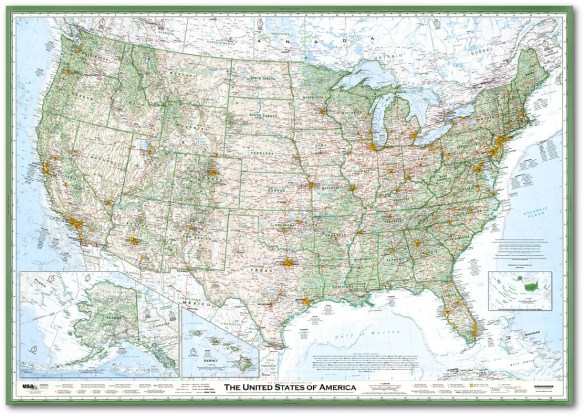
Created by over two years, Slate explains what made David Imus’ map The Essential Geography of the United States of America the Best of Show at the annual competition of the Cartography and Geographic Information Society.
Wikipedia, the free encyclopedia that not just anyone can edit
 Wikipedia is amazing, but I’ve come to realise that getting involved in actual editing work there is a very daunting prospect. Adding a link or fixing a typo is simple enough, but when it comes to creating a new article from scratch a new Wikipedian will discover that they have a lot to learn.
In this post I’ve listed what I think are the barriers to entry for an aspiring Wikipedia editor. This post may also be useful as a ‘getting started’ guide.[1]
 halfblog.net